$220.00
of $500.00 Raised
4
donations
Still Here: A Story of Resilience, Motherhood, and Invisible Battles
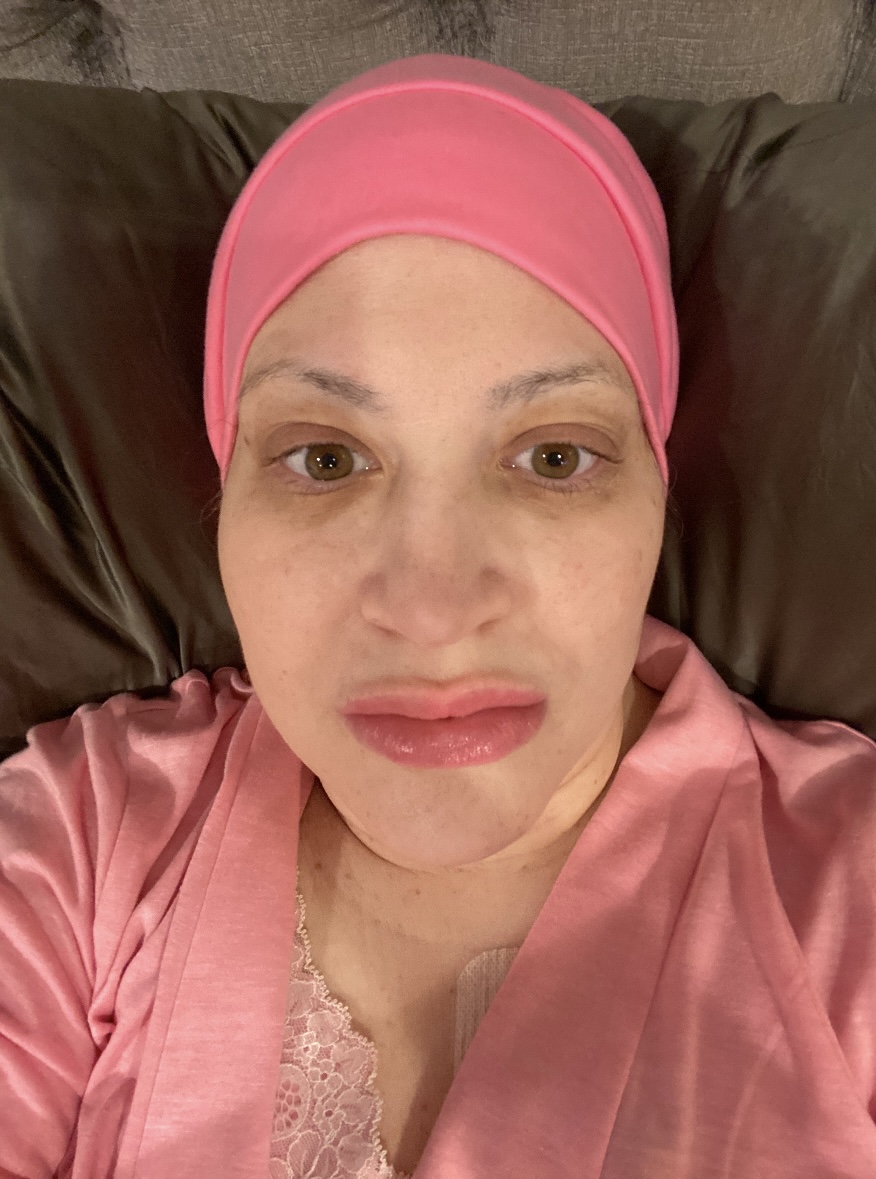
Christine Anastos is organizing this KittyFund™ for Jordana Needle.
Greetings,
From the moment I learned about Jordana Needle, her story touched my heart in a deeply personal way. The strength, grace, and vulnerability she carries as she faces her diagnosis are impossible to ignore - and, impossible not to be moved by. Jordana is not only navigating an unimaginably difficult path, she is doing so with a clarity and courage that reflects everything KittyFund™ stands for: compassion, dignity, and community support for women in the fight of their lives.
It is an honor to create the very first KittyFund™ in Jordana’s name - not only because she deserves every ounce of support we can offer, but because her voice represents so many others who are too often unseen or unheard. This fund is for Jordana, and it is also for every woman who longs to be held, seen, and uplifted during cancer.
Below is Jordana’s story, in her own words. I invite you to read it, hold it close, and stand beside her as we walk this path together.
In health,
Christine
Founder, Connect & Thrive 💛🐆🌟
By Jordana Shief Needle
My mother was first diagnosed with breast cancer at 48. At the time, I had just graduated college and was working in Miami. She underwent extensive genetic testing, but everything came back negative. Years later came a diagnosis of lung cancer, and then—again—a different breast cancer in her other breast in 2015. Still, no known genetic cause. I lost my dad to GBM brain cancer in 2014. My grandmother in 2017 to lung cancer. Three of my mom’s four aunts had breast cancer. With that family history, I began annual mammograms at age 29. It wasn’t optional—it was survival. We knew cancer far too well.
I’ve always carried the label “medically complex.” I’ve survived multiple open abdominal surgeries, septic shock, and multiple organ failure due to ruptured intestines. I’ve relied on a central port for IV fluids and total parenteral nutrition at times. I live with Crohn’s disease, dysautonomia, and was later diagnosed with Ehlers-Danlos syndrome—a connective tissue disorder that finally explained my long history of internal ruptures and fragility.
Then came COVID. My children were one, two, and three years old. We were locked in like the rest of the world. My husband left his job as an ophthalmic photographer because there was no PPE. I shifted my career focus temporarily from commercial real estate to sourcing PPE for healthcare providers.
In September 2020, we took a brief family trip to Maine. That’s when I began vomiting uncontrollably. I knew something was seriously wrong. Back in Boston, I went to the emergency department and was diagnosed with a partial bowel obstruction. With COVID risks still high and no vaccine yet available, I opted to go home instead of being admitted.
I impatiently waited months for a GI appointment. When I finally saw a specialist, I assumed my Crohn’s was out of remission and active. My symptoms never improved. I was exhausted—not just tired, but a fatigue that seeped into my bones. The night of my colonoscopy I learned it was not my Crohn’s. I remember lying in bed, telling my husband through tears, "Something is wrong. I don’t know what it is, but I know it’s bad."
A temporary primary care provider dismissed my worsening health and even advised skipping my mammogram. When I finally saw my new PCP, Dr. Spencer Rittner in late April 2021, the first thing he said was, “You haven’t gotten your mammogram. Will you go today?” I scheduled the first available appointment.
That scan changed everything. They found a spiculated mass—just about a centimeter. It looked like early-stage breast cancer. No signs it had spread. I took time to research and chose Dana-Farber for their Young and Strong Program.
Fifteen days post-op from my original lumpectomy and sentinel node biopsy, I walked into my follow-up expecting clarity. Instead, I was blindsided. Not only had the cancer reached my lymph nodes, but they had also found a second, pathologically different tumor in the nodes—one far more aggressive. Dana-Farber had never seen a presentation quite like mine. My case dominated the tumor board.
The first tumor was DCIS and IDC ER+/PR+, HER2-, grade 2. The second was IDC ER-/PR-, HER2+, grade 3. The hidden tumor explained the relentless fatigue. I would begin treatment as a triple-positive patient. Additional MRI scans found more aggressive tumors. I also had LCIS (lobular carcinoma in situ), elevating my lifetime risk of developing invasive cancer. And all of this was found just months after I had skipped my regular mammogram.
September 8, 2021—my oldest son’s first day of kindergarten—was also my first day in the chemo chair. I missed that milestone so I could be there for all the ones still to come. I spent over 13 hours at Dana-Farber that day, cold-capping in a fruitless effort to save my hair.
Treatment nearly broke me. I was hospitalized with infections after three of my four chemo infusions. I went into congestive heart failure—twice—but managed to recover enough to complete 17 rounds of Herceptin and Perjeta from 2021 until 2023. Due to my heart, I couldn’t take the year-long oral chemo that often follows. Chemo-induced cardiomyopathy, Ehlers-Danlos and dysautonomia continue to affect me every day. Additionally, I have some scarring in my lungs from radiation.
After chemo, I underwent three more lumpectomies and 30 rounds of radiation. I wanted a double mastectomy, but my infection risk was deemed too high during active treatment. I felt trapped in a body that had already endured too much.
Still, I found support—online and in person. Through the group The Breasties, I discovered doctors specializing in sensation-sparing mastectomies. At a gala, I met Dr. Ron Israeli and Dr. Jonathan Bank from NYBRA. They were adamant that if I wanted a double mastectomy, that is what I should be able to have. It felt very empowering and I later attended a symposium led by Dr. Anne Peled and Dr. Jonathan Bank. Though Boston doctors had told me I wasn’t a candidate for flap reconstruction due to my previous surgeries, NYBRA disagreed. They ordered a CTA scan and found I could have a DIEP flap with a low risk of failure.
December 7, 2023 was double mastectomy day. Dr. Jonathan Bank, Dr. Ron Israeli and Dr. Craig Larsen were my new team. They were able to reconstruct one side with DIEP and the other with a DIEP/SIEA combo skin sparing, non-nipple sparing, sensation preserving DMX. I woke up whole. I woke up free. That was the moment the weight began to lift.
I continue treatment—Zometa infusions for five years, aromatase inhibitors for ten. I’ve now lived to see all three of my children head off to kindergarten and 1st grade. That was never guaranteed. And it wouldn’t have been possible without my doctors, my friends, my incredible husband—and Christine, whose unwavering support carried me through.
I am still here. This is not just my story—it’s a reminder to listen to your body, to fight for answers, and to hold on, even when the path disappears beneath your feet.
💖
Donations
Nicholas
$10.00
•
a year ago
Nicholas
$10.00
•
a year ago
Tommi
$100.00
•
a year ago
Christine
$100.00
•
a year ago
Thank you for being such a wonderful friend and human being. Your strength, grace, and courage have been a tremendous inspiration to me, Jordana. You remind us all how powerful it is to face life with our hearts wide open. 💛🐆🌟
Started on May 1, 2025
Join Our Growing Community
Stay Connected
© 2026 Connect & Thrive, Inc. (CAT) - Public Benefit Corporation. All Rights Reserved.
CAT offers health informational services only. We do not provide medical care, diagnosis, or treatment. You may learn more in our Terms of Use.